Bible Cartoon: Matthew 13 - Parable of the mustard seed - Scene 02 - Large plant
Click on Add to cart button below shopping cart.
Purchased Bible Cartoons do not have watermarks. Links to Cartoons provided on email once purchase is completed.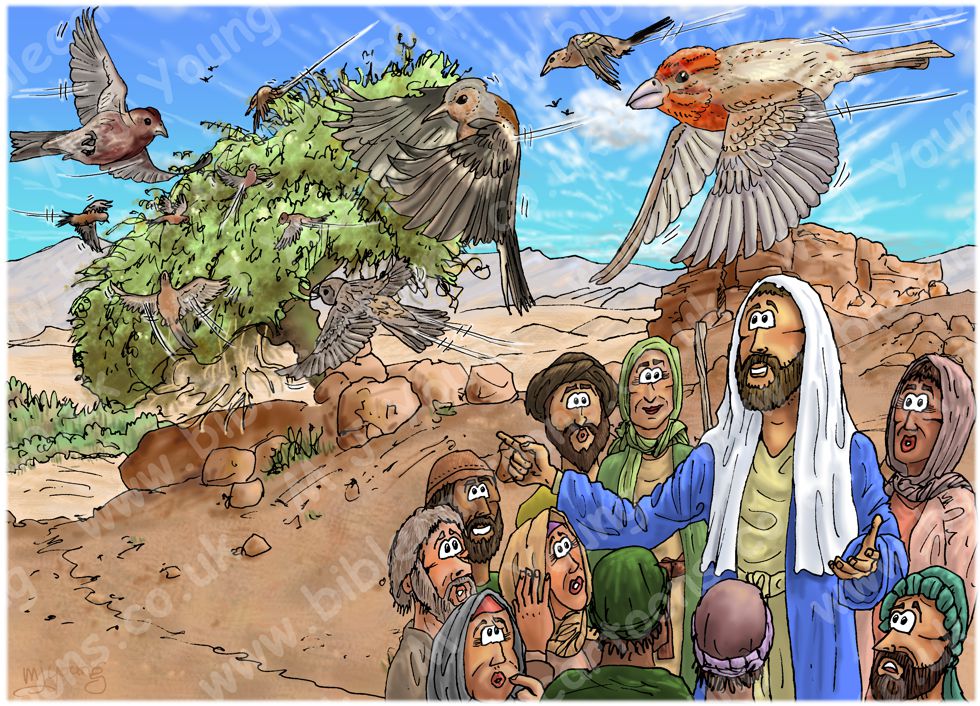



Bible Book: Matthew
Bible Book Code: 4001303201
Scene no: 2 of 2
Bible Reference & Cartoon Description
Matthew 13:32b (NLT)
[Jesus continued,] ”It (a mustard seed) is the smallest of all seeds,… but it becomes the largest of garden plants; it grows into a tree, and birds come and make nests in its branches.”
DRAWING NOTES:
TIME OF DAY:
Unspecified in the Bible narrative. Daytime.
LIGHTING NOTES:
The sun (unseen, high in the sky on the right) illuminates this scene, casting shadows below and to the left of figures and objects.
CHARACTERS PRESENT:
Jesus (in blue outer robe and white head scarf), various people listening to his parable.
Finches, especially Callacanthis burtoni (Spectacled Finch).
RESEARCH/ADDITIONAL NOTES:
This scene shows the reaction of the crowd of people on hearing the parable of the mustard seed, as told by Jesus.
Here’s the scene without the figures or birds in the foreground.
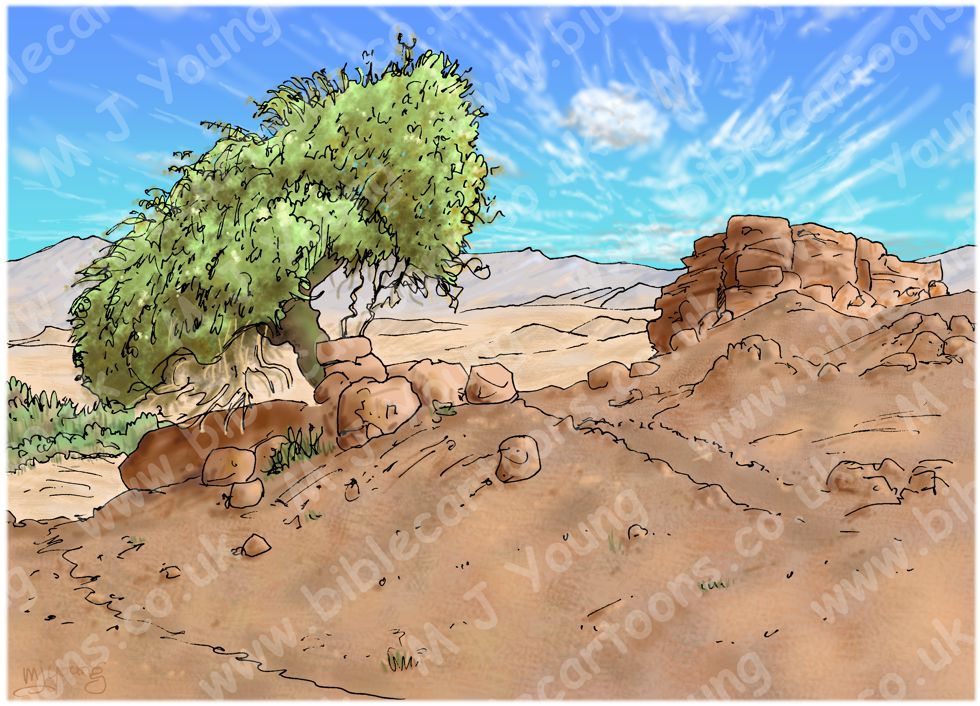
Background of Matthew 13 – Parable of the mustard seed – Scene 02 – Large plant
Click on the colour bar below to view/buy this Background:
Background of Matthew 13 – Parable of the mustard seed – Scene 02 – Large plant
“The Kingdom of heaven is like a mustard seed… but when it is grown, it is greater than the herbs and becomes a tree” (Matthew 13:31-32)
You know this parable. But do you know what Jesus was really saying? Most translations miss the profound Hebrew wordplay that would have made Jesus’s audience gasp. When He said “mustard seed,” He wasn’t just talking about size. The Hebrew word for “small” (katan) doesn’t just mean tiny. It often implies something insignificant or despised. When Scripture speaks of something becoming “great” (gadol), it frequently describes God’s miraculous intervention.
This is God’s pattern throughout Scripture. He chooses the katan (small, despised) to accomplish the gadol (great, mighty). Think of David versus Goliath, or God choosing Israel as the smallest of nations.
And this same katan to gadol pattern echoes through every promise in Scripture, from God’s shalom that transforms brokenness into wholeness, to His chesed (lovingkindness) that turns rejection into covenant love.”
[Source: IsraelBibleCenter.com]
The birds flying to and from the mustard bush are various species of Finch. The largest of which (above the figures) is Callacanthis burtoni (aka the Spectacled Finch), a species of finch in the family Fringillidae. It is found in temperate northern regions of the Indian subcontinent, ranging across Afghanistan, India, Nepal, and Pakistan. Its natural habitat is temperate forests with a lush landscape.
Bizarre and unique-looking finch. Note the lumpy diagnostic patch of bright color around the eye and forehead: red in males, yellow in females. Brownish overall with white wingbars; underparts are rosy-tinged in males. Breeds in mountainous and hilly forests and winters at lower elevations in clearings and forest edge. Moves in pairs and small to medium-sized flocks, often foraging out in the open or perched up on top of trees. Typical song descending and fluid, with a sharp uptick towards the end; also gives fluty and chipping notes.
[Source: https://ebird.org/species/spefin1]
in TXP Article excerpt
Bible Doctrine Notes
13:31-32 THE CHURCH, God’s Kingdom (5.13A)
Worldly success standards do not apply to the kingdom of God; it grows as God choses and sees fit. In spite of apparent small, humble beginnings, the kingdom of God grows to enormous significance. See note of Matthew 13:24-30.