Map showing the Persian empire
Click on Add map to cart button below shopping cart.
Purchased Maps do not have watermarks, are high resolution (150dpi) & have crisp, clear labels/town names.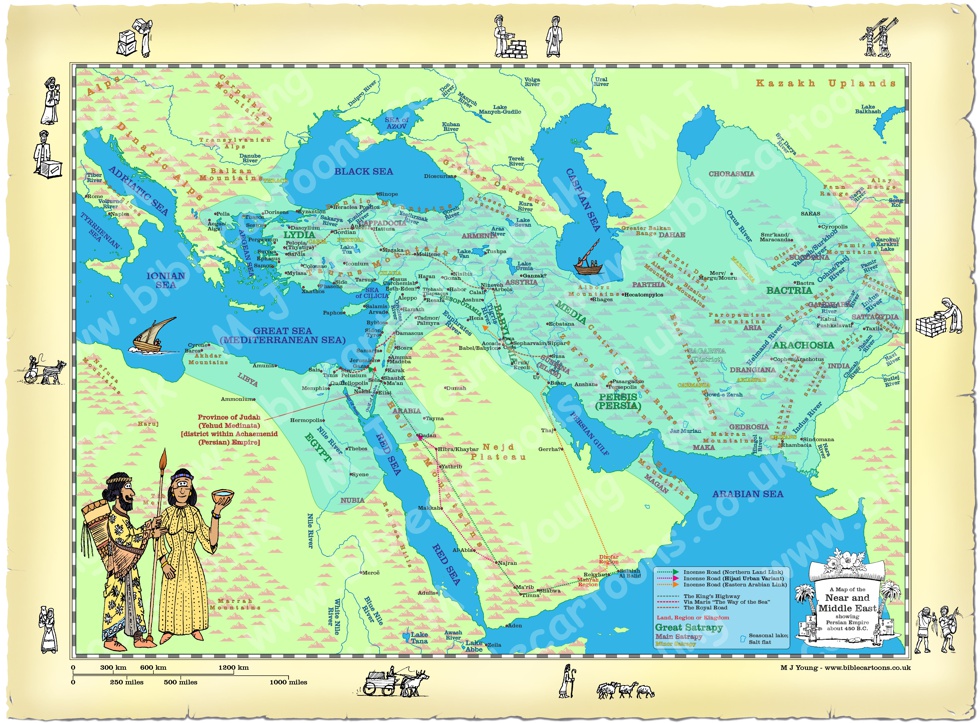
Bible Book: Ezra
Bible Book Code: 1500100101a
Bible Reference & Map Description
This map shows the extend of the Persian empire, around 500 BC, which was just after the second temple in Jerusalem had been completed, which was in 515 B.C.
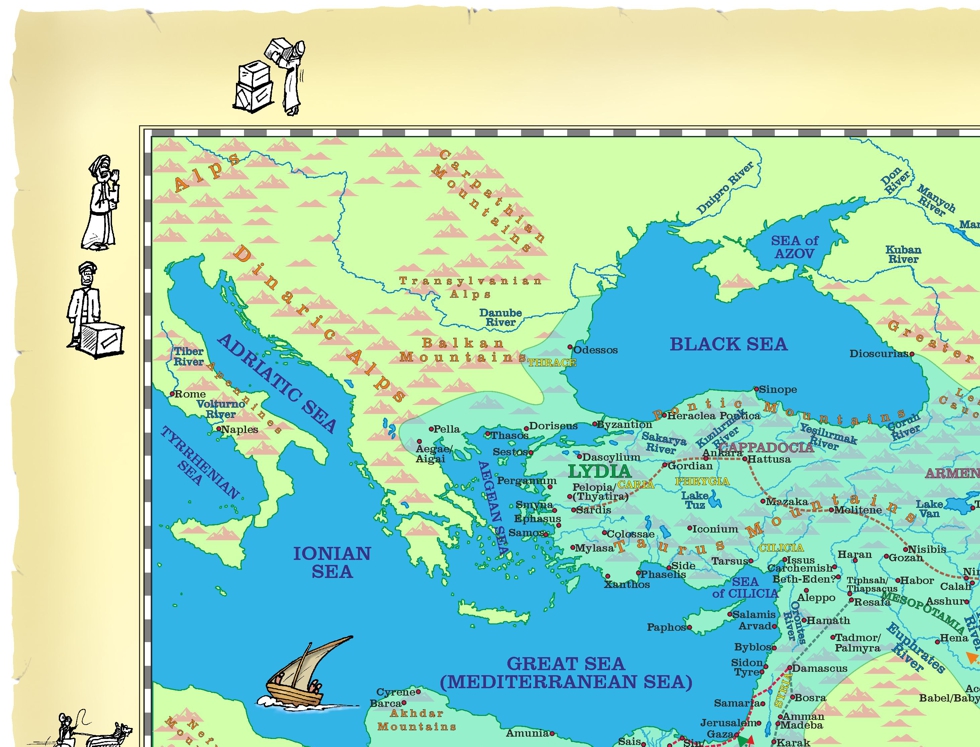
NW corner of Map of the Near and Middle East showing the Persian empire
Here’s a close-up of the NW corner to show the quality of the map you receive after purchase.
Date
During the 500s B.C., key biblical events centred on the return of Jewish exiles from Babylon and the rebuilding of the temple in Jerusalem under Persian rule.
The Second Temple was completed in Jerusalem in 515 B.C.
The book of Ezra covers the period at the height of the Persian empire: the Bible Book of Ezra span from 538 BC to 457 BC.
Esther became queen of Persia in 478 B.C. nearly 25 years after the Persian empire reached its peak extend and power.
Link to Maps
Click colour bar below to view/buy all 6 of the matching BC Maps in the bundle:
BC Maps: Near and Middle East (Persian empire) bundle
Notice the figures on the map.
If you look carefully at the map border you will see I have included some little black and white figures. I have also added two figures in the bottom left hand corner, which represent typical Persian costume of the time.
Link to related Bible Cartoon
Click orange bar below to see the Bible Cartoon of Ezra chp 03, on the BC Gallery page, with download & purchase options:
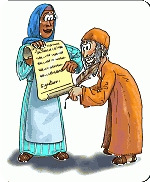
Bible Cartoon: Ezra 03 – Rebuilding the temple – Scene 04 – Foundation and tears
Bible References
Ezra 3:10-13 (ANIV)
Rebuilding the Temple
10 When the builders laid the foundation of the temple of the Lord, the priests in their vestments and with trumpets, and the Levites (the sons of Asaph) with cymbals, took their places to praise the Lord, as prescribed by David king of Israel. 11 With praise and thanksgiving they sang to the Lord:
“He is good;
his love to Israel endures for ever.”
And all the people gave a great shout of praise to the Lord, because the foundation of the house of the Lord was laid. 12 But many of the older priests and Levites and family heads, who had seen the former temple, wept aloud when they saw the foundation of this temple being laid, while many others shouted for joy. 13 No-one could distinguish the sound of the shouts of joy from the sound of weeping, because the people made so much noise. And the sound was heard far away.